
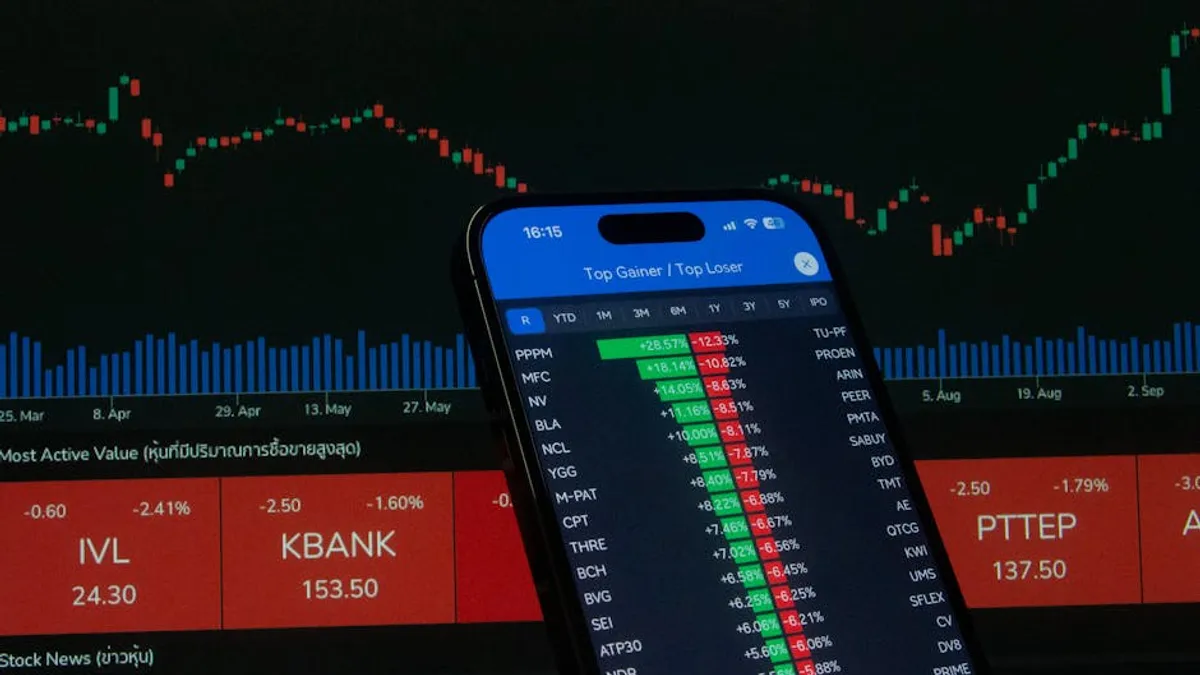
The FTSE 100 serves as a critical benchmark for the UK equity market, representing the 100 largest UK-listed companies by market capitalization. For SEO professionals, marketers, and site owners, understanding its movements extends beyond general economic awareness; it informs content strategy, identifies emerging market trends, and signals shifts in consumer and business confidence that can impact niche markets and advertising spend. Analyzing its price, outlook, inherent risks, and observable market signals provides a foundational layer for strategic planning and competitive intelligence, especially when targeting audiences influenced by broader economic performance. Understanding the FTSE 100's price and outlook is therefore vital for strategic content planning in the financial sector.
Understanding the FTSE 100 Price Dynamics
The FTSE 100's price is a real-time aggregate of its constituent companies' share values, weighted by market capitalization. This means larger companies exert a greater influence on the index's overall movement. When assessing its current valuation, it is essential to look beyond the headline number to underlying metrics. Price-to-Earnings (P/E) ratios, dividend yields, and price-to-book values of the index's largest components offer more granular insights. A high P/E ratio, for instance, suggests investors anticipate strong future earnings growth, while a low ratio might indicate undervaluation or expected headwinds. The index's historical performance, including its all-time highs and significant drawdowns, provides context for current levels, illustrating how it has reacted to previous economic cycles, geopolitical events, and technological shifts. For instance, the index's recovery post-2008 financial crisis or its volatility during Brexit negotiations highlight its responsiveness to macro-level factors.
Key Valuation Metrics
Monitoring the aggregated P/E ratio of the FTSE 100 provides an indication of investor sentiment and potential over/undervaluation. A P/E ratio significantly above its historical average might suggest a market susceptible to corrections, while a ratio below average could signal a buying opportunity, assuming underlying company fundamentals remain sound. Dividend yields are also crucial; the FTSE 100 is often favored for its relatively high dividend payouts compared to other global indices, attracting income-focused investors. Changes in aggregate dividend payouts or yield percentages can signal shifts in corporate profitability or capital allocation strategies among its constituents.
Navigating the FTSE 100 Outlook
The outlook for the FTSE 100 is intrinsically linked to both domestic UK economic conditions and the broader global economic landscape. Given its significant exposure to international revenues – a substantial portion of its constituents generate earnings outside the UK – global growth rates, commodity prices, and currency fluctuations play a disproportionate role. Forecasts from major financial institutions and central banks regarding GDP growth, inflation, and interest rates are key indicators. For example, a projected slowdown in global trade often translates to a more cautious outlook for the index's multinational mining, oil, and financial sectors.
Macroeconomic Influences
Central bank policies, particularly from the Bank of England, the European Central Bank, and the US Federal Reserve, directly impact the FTSE 100. Interest rate decisions influence borrowing costs for companies and consumers, affecting profitability and spending. Inflationary pressures can erode corporate margins and consumer purchasing power, while strong employment figures might signal robust consumer demand. Monitoring these macroeconomic data points and their implications for corporate earnings is fundamental to forming an informed outlook.
Sectoral Performance and Global Interdependencies
The FTSE 100 is heavily weighted towards financial services, energy, and basic materials. This composition means that global commodity price movements (e.g., oil, metals) and the health of the banking sector significantly sway the index. A strong global manufacturing cycle benefits basic materials, while rising oil prices boost energy companies. Conversely, sustained weakness in these sectors can drag down the entire index, irrespective of the performance of other, smaller sectors like technology or consumer staples.
Identifying Core Risks to the FTSE 100
Investing in or analyzing the FTSE 100 involves acknowledging a range of inherent risks that can impact its performance. These risks are multifaceted, spanning geopolitical tensions to specific economic headwinds. Understanding these allows for more robust strategic planning and content development that addresses potential market shifts.
Geopolitical and Regulatory Headwinds
Geopolitical events, such as international conflicts, trade disputes, or significant political shifts in major economies, can introduce considerable volatility. The FTSE 100, with its global revenue exposure, is particularly sensitive to disruptions in international trade routes, supply chains, and diplomatic relations. Domestically, changes in UK government policy, taxation, or regulatory frameworks (e.g., environmental regulations for energy companies, financial regulations for banks) can directly affect the profitability and operational costs of its constituent companies.
Inflationary Pressures and Interest Rate Impact
Persistent high inflation is a significant risk. It erodes the real value of future earnings and can force central banks to raise interest rates aggressively. Higher interest rates increase borrowing costs for companies, potentially slowing expansion and reducing profitability. For consumers, higher rates can curb spending, impacting consumer-facing businesses within the index. The balance between combating inflation and avoiding a recession is a constant concern for policymakers, and their actions directly influence the FTSE 100's trajectory.
Key risks to monitor include:
- Global economic slowdowns, particularly in major trading partners.
- Persistent supply chain disruptions affecting manufacturing and consumer goods.
- Currency fluctuations, especially a strong pound, which can reduce the value of overseas earnings for multinational companies.
- Sector-specific regulatory changes, such as new climate policies impacting energy firms.
- Unforeseen black swan events, like pandemics or natural disasters, which can trigger widespread market panic.
Pro Tip: When evaluating FTSE 100 risks, differentiate between systemic risks (affecting the entire market) and idiosyncratic risks (specific to individual companies or sectors). Systemic risks often require a broader portfolio adjustment or strategic pivot in content focus, while idiosyncratic risks may offer opportunities within specific niches.
Interpreting Key Market Signals
Market signals are the data points and trends that provide clues about the FTSE 100's future direction. Interpreting these effectively requires a blend of fundamental and technical analysis, helping to anticipate shifts in market sentiment and underlying value.
Earnings Reports and Dividend Trends
Individual company earnings reports, particularly from the largest FTSE 100 constituents, are potent signals. Strong earnings growth, positive guidance, and increasing dividend payouts indicate underlying corporate health and can boost investor confidence in the broader index. Conversely, widespread earnings misses or reduced dividends can signal economic weakness or sector-specific challenges. Aggregated earnings data for the entire index, often compiled by financial data providers, offers a macro view of corporate profitability.
Technical Indicators and Trading Volumes
Technical analysis involves studying price charts and trading volumes to identify patterns and predict future movements. Indicators like moving averages, Relative Strength Index (RSI), and MACD can signal overbought or oversold conditions, potential trend reversals, or continuation patterns. High trading volumes accompanying significant price movements lend credibility to the trend, while low volumes on price shifts might suggest a lack of conviction. These technical signals, when combined with fundamental analysis, offer a more comprehensive view of market dynamics.
Strategic Considerations for FTSE 100 Engagement
For market analysts and content creators, staying abreast of the FTSE 100's performance, risks, and outlook is not merely an academic exercise. It directly informs the relevance and timeliness of published content, advertising strategies, and audience targeting. Understanding the index's sectoral biases, for instance, allows for anticipation of content demand around specific industries during periods of heightened activity or concern. Similarly, identifying emerging risks or positive market signals can prompt proactive content creation that addresses investor concerns or highlights opportunities, positioning a platform as a timely and authoritative resource.
Frequently Asked Questions About the FTSE 100
What defines the FTSE 100?
The FTSE 100, or "Footsie," is a share index of the 100 companies listed on the London Stock Exchange with the highest market capitalization, representing approximately 80% of the LSE's total market value.
How does the FTSE 100 differ from other major indices?
Unlike indices such as the S&P 500 or DAX, the FTSE 100 has a significant weighting towards multinational companies that derive a large portion of their revenue from outside the UK, making it highly sensitive to global economic conditions and currency fluctuations.
What are the primary drivers of its movement?
Key drivers include global economic growth, commodity prices (due to heavy weighting in energy and mining), interest rate expectations, inflation data, and geopolitical events that impact international trade and corporate profitability.
How can one monitor its performance effectively?
Effective monitoring involves tracking real-time index values, analyzing constituent company news and earnings reports, staying informed on macroeconomic data releases from major economies, and observing technical analysis indicators.